A First Ski Route in Peru
A former data consultant turned elite alpinist, Fay Manners, has made history as the first person to ski a new route high in Peruvian mountains on southwest ridge of Mt Ranrapalca, deemed inaccessible for more than 40 years due to dangerous glacial conditions.
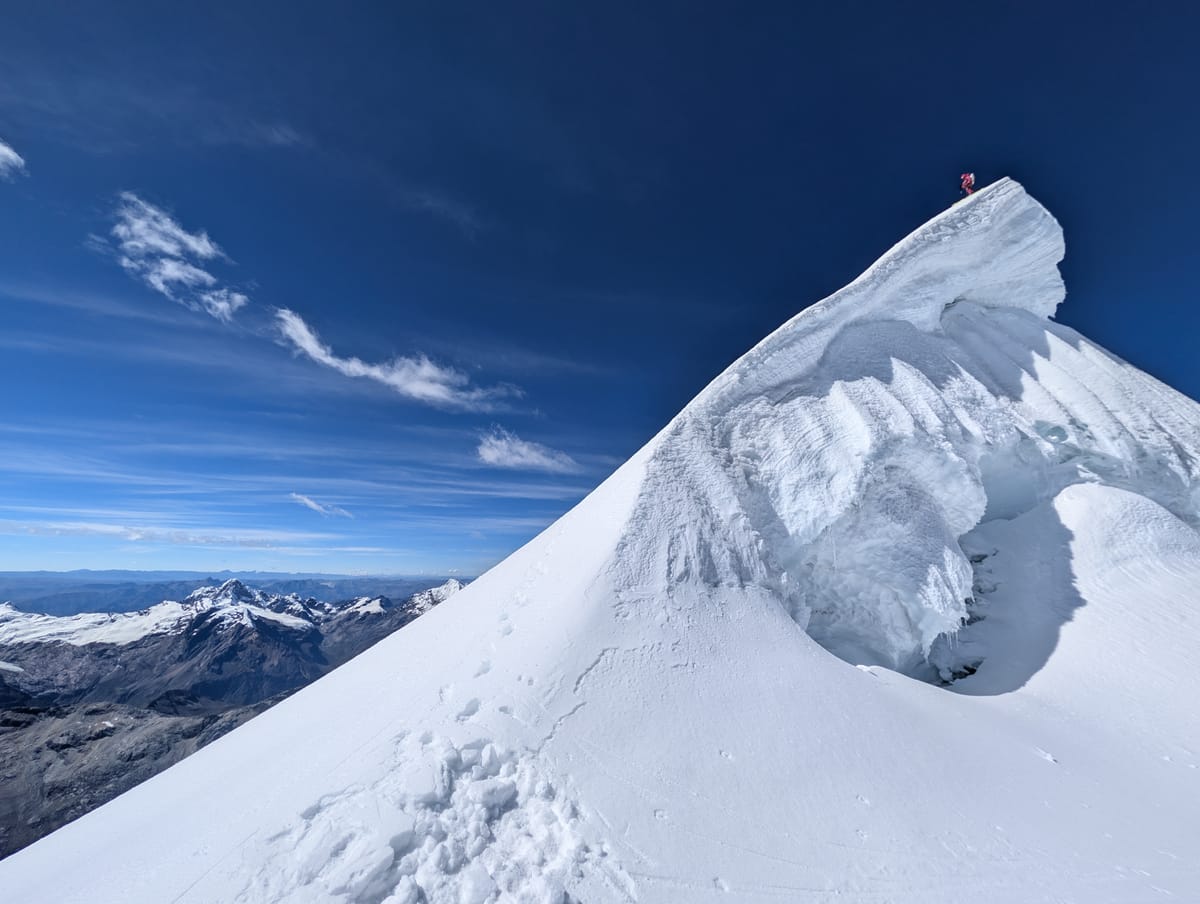
A former data consultant turned elite alpinist, Fay Manners, has made history as the first person to ski a new route high in Peruvian mountains on southwest ridge of Mt Ranrapalca, deemed inaccessible for more than 40 years due to dangerous glacial conditions.
Fay, who is originally from Bedford in England but has been based in Chamonix since 2015, completed the route alongside Italian ski mountaineer Marco Malcangi in Peru's Cordillera Blanca mountain range whilst on expedition to explore and better understand the mountains, the snow, terrain and possibilities for future projects.
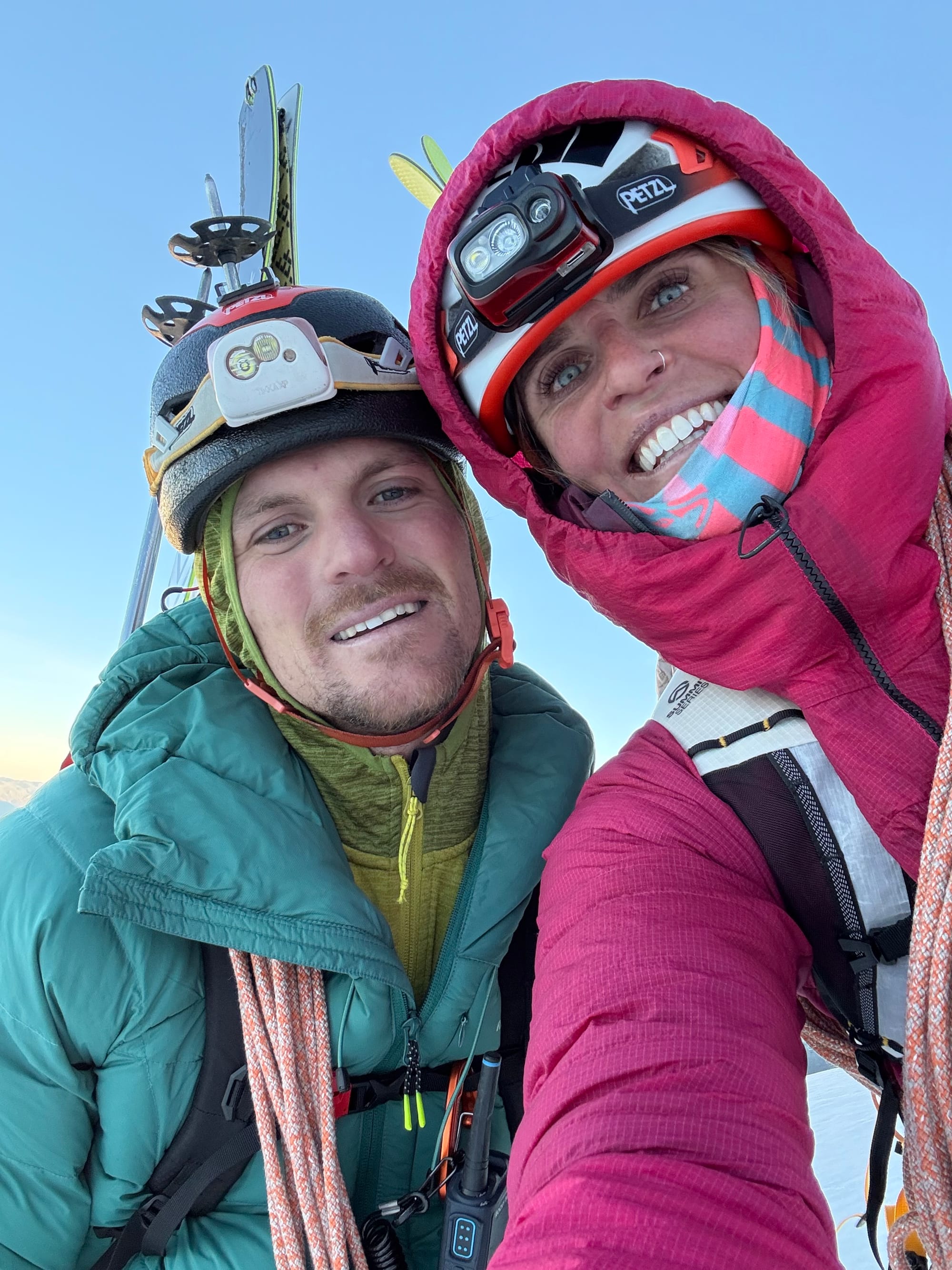
Fay explained; “After arriving in the region we began acclimatisation with a hike to 4,600m followed by some days of rock climbing. Our plan was to be a relatively straightforward acclimatisation ascent of Vallunaraju (5,686m), however during the approach, our attention shifted elsewhere. From our camp, a striking line descending from the col between Ranrapalca and Ocshapalca immediately stood out."
“The route presented a dramatic contrast in terrain. A wild lower section weaving through improbable steep crevasses and giant seracs [ice pillars] led into a wide, lower-angled upper face two completely contrasting terrains stacked on top of one another. Above it all sat a small steep summit coated in spring snow.
“From below, the line appeared surprisingly obvious, almost like a natural route leading directly toward the summit. Yet the chaotic glacier below suggested otherwise. Looking upward, we weren’t sure reaching the upper slopes would be possible.”
Curious about the route’s history, they asked a local guide, Cesar Vicuña, about the route. He explained that the line had not been climbed for decades and described previous attempts as complicated by impassable glacial terrain.
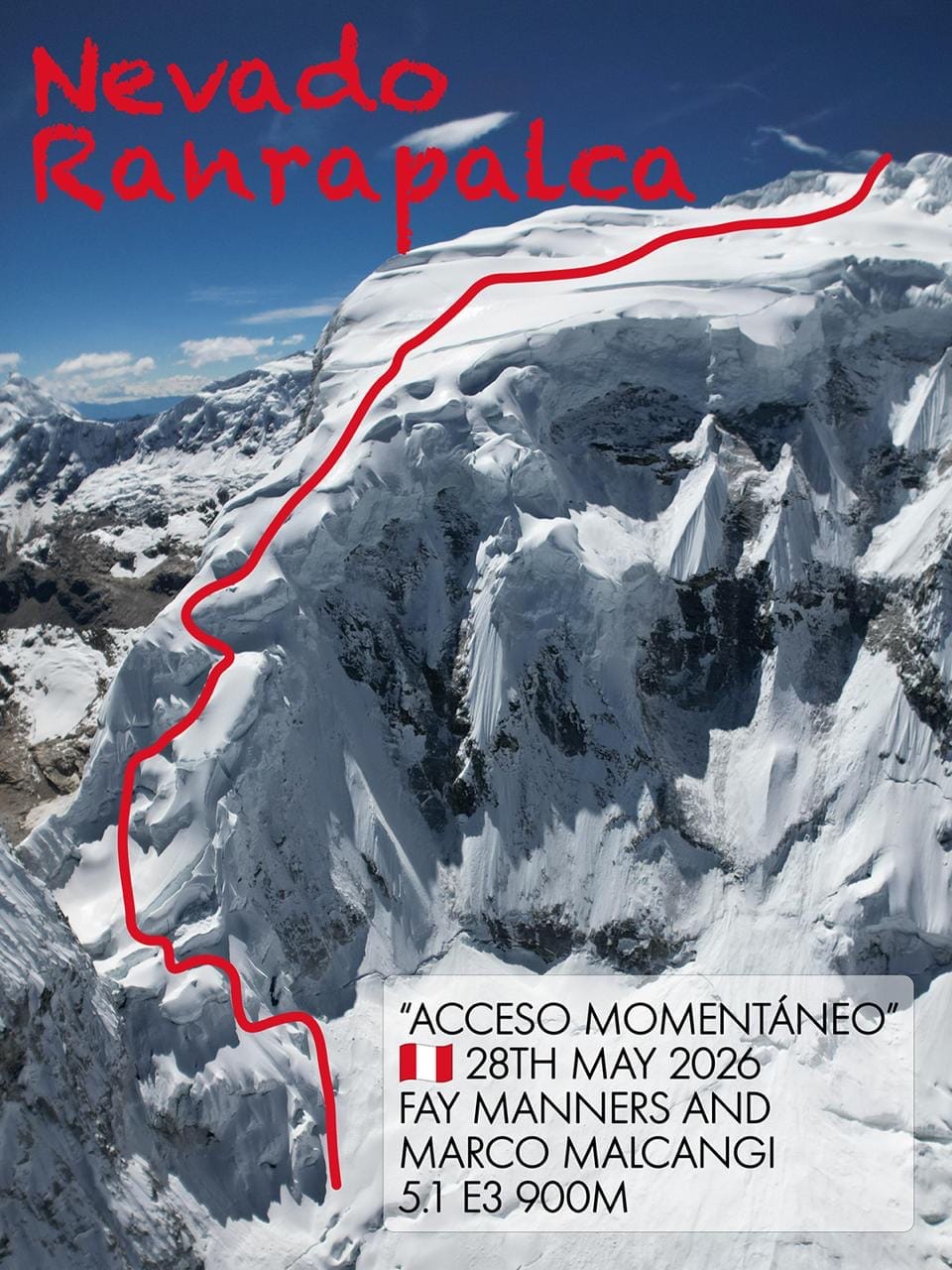
He himself had attempted it in 2022 without success and had since learnt that it was last climbed in 1980 by four Swiss climbers. Nobody had climbed it since and certainly nobody had attempted to ski it.
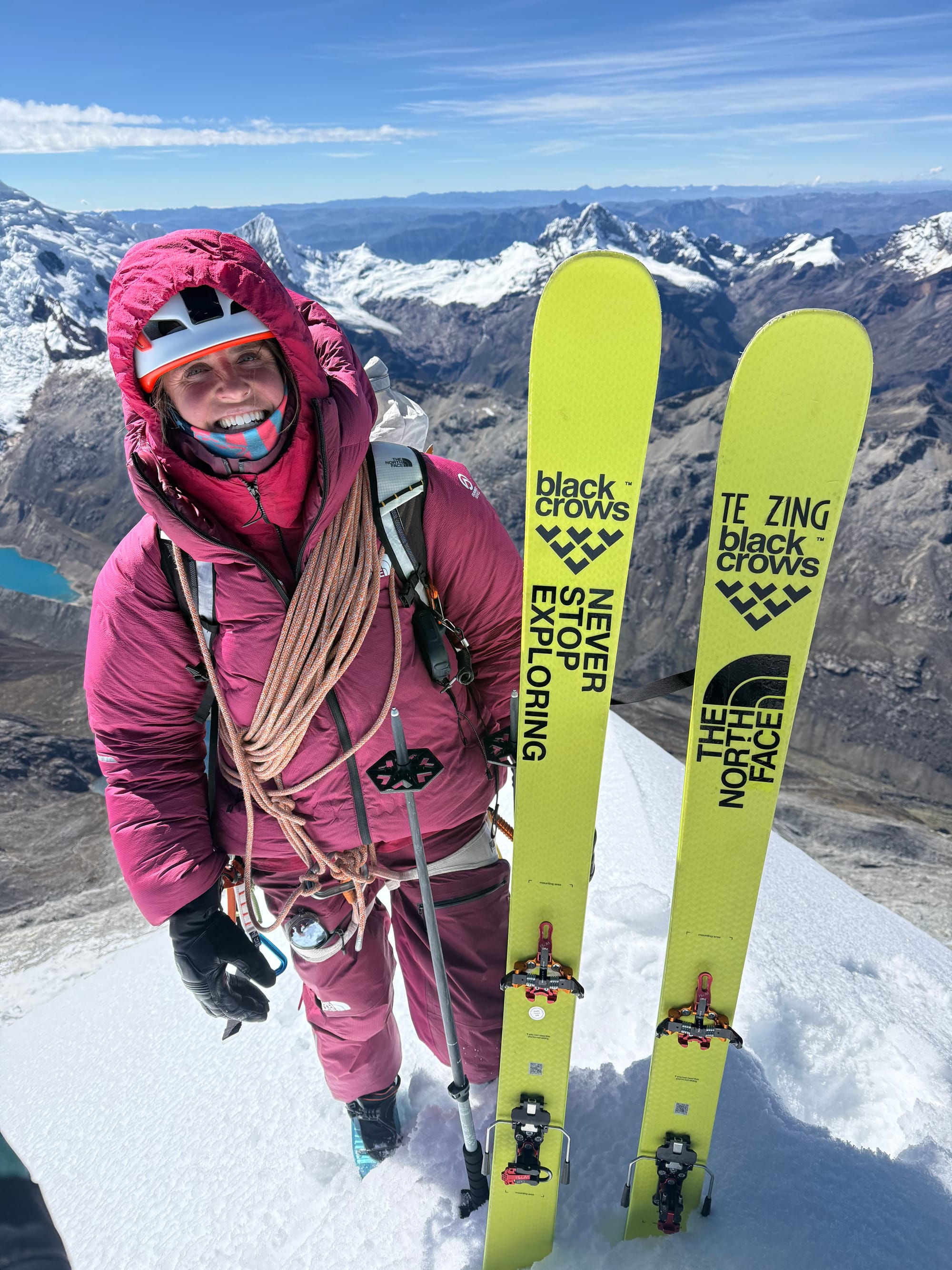
“We returned carrying equipment for several days in the mountains,” added Fay. “Me and Marco carried skis and ski boots, while the others had all of the mountaineering equipment and snow protection to climb up and down. Leaving camp at 4 a.m., we spent the day trail breaking and navigating through heavily crevassed terrain, establishing a safe line through the first section of the route before returning to camp in the afternoon."
“The following day, me and Marco returned for the summit push, carrying skis with the intention of skiing continuously from the summit to the end of the glacier below. Starting at 1 a.m., we climbed through the night.”
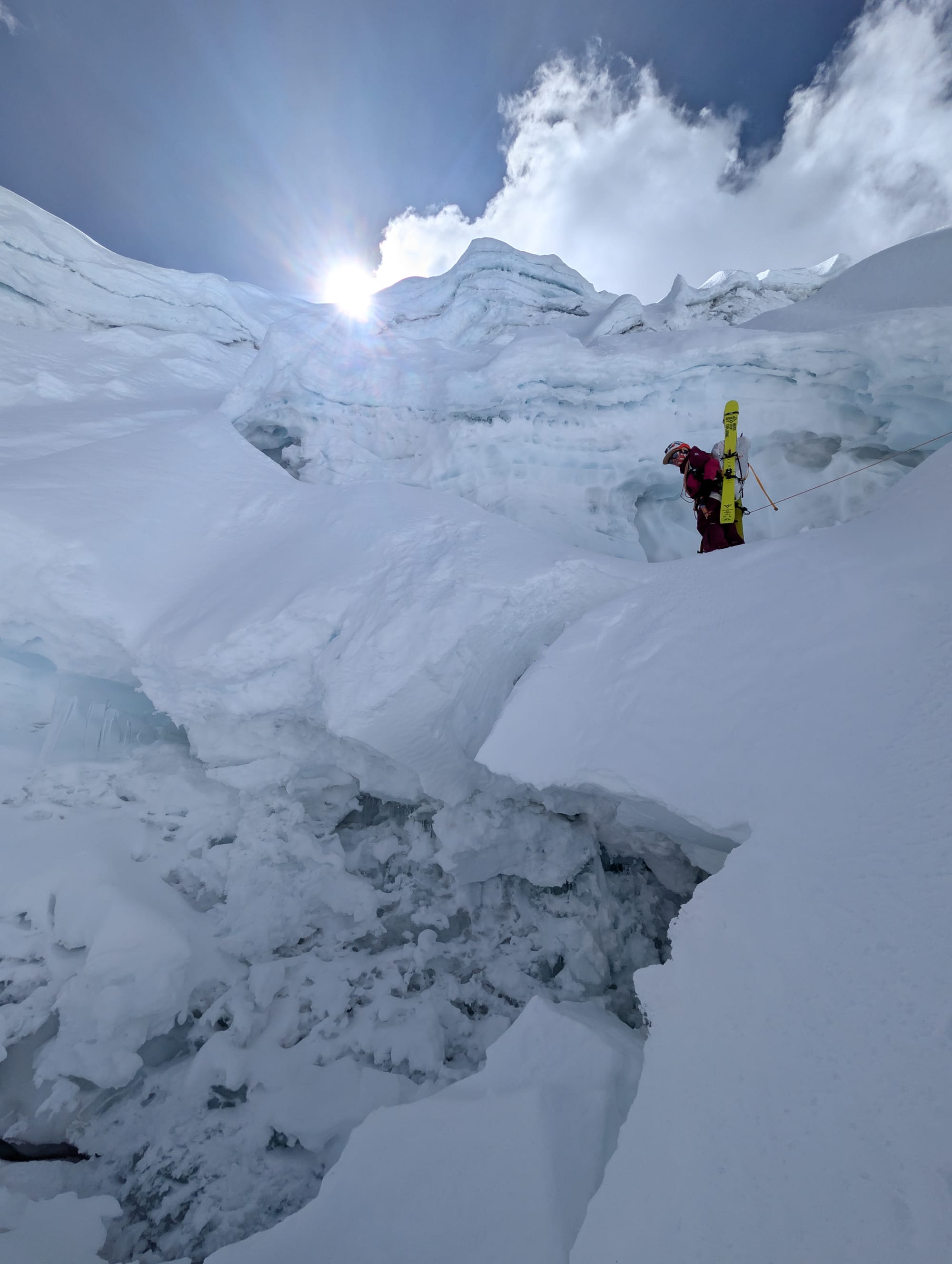
The ascent demanded constant adaptation: jumping crevasses, climbing sections of squeaky névé ice, trail breaking through powder and crust, skinning long glaciers, crossing fragile snow bridges and negotiating exposed terrain.
It became a true ski mountaineering route climbing awkwardly with skis attached to packs, moving precariously through technical terrain, and making an abseil through ice and over a crevasse too large to jump - them to above 6,000 metres.
“The ski from the summit was spectacular but technical. Wide and open at first and then very technical with huge crevasse. The exposure was very high. We had to abseil down 30 metres with our skis on, and in the lower section we had to jump over crevasses on our skis without being roped. It was quite technical, and you had to be fast because the conditions were warming and becoming more dangerous.”
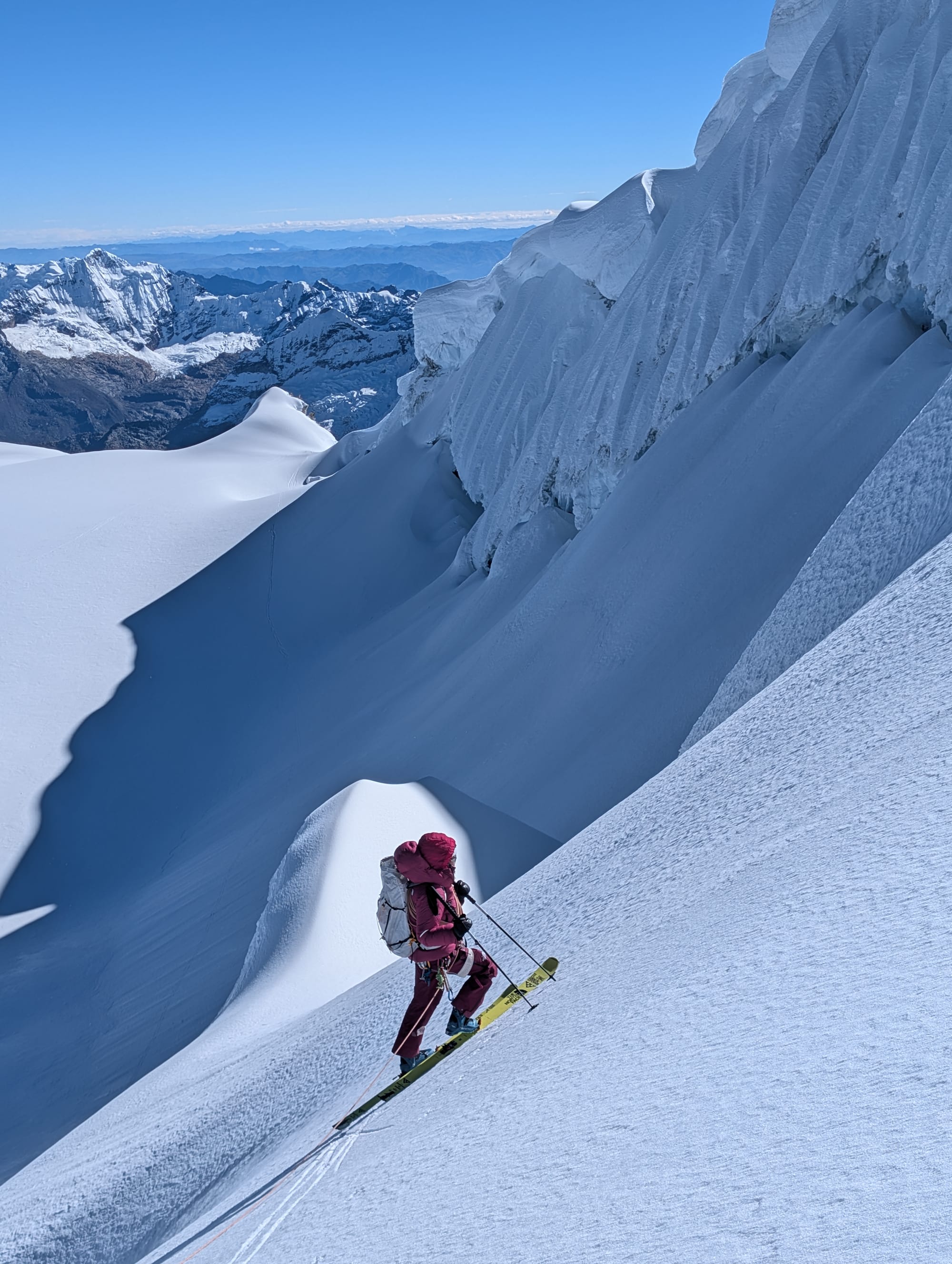
Fay and Marco named the route Acceso Momentáneo (“Momentary Access”), reflecting their fortune in discovering the line unexpectedly and finding it in climbable condition.