Record Numbers of Skiers & Boarders
The new edition of a respected annual report has concluded that the 2024-25 season saw record numbers of skiers take to the slopes around the world.

The new edition of a respected annual report has concluded that the 2024-25 season saw record numbers of skiers take to the slopes around the world.
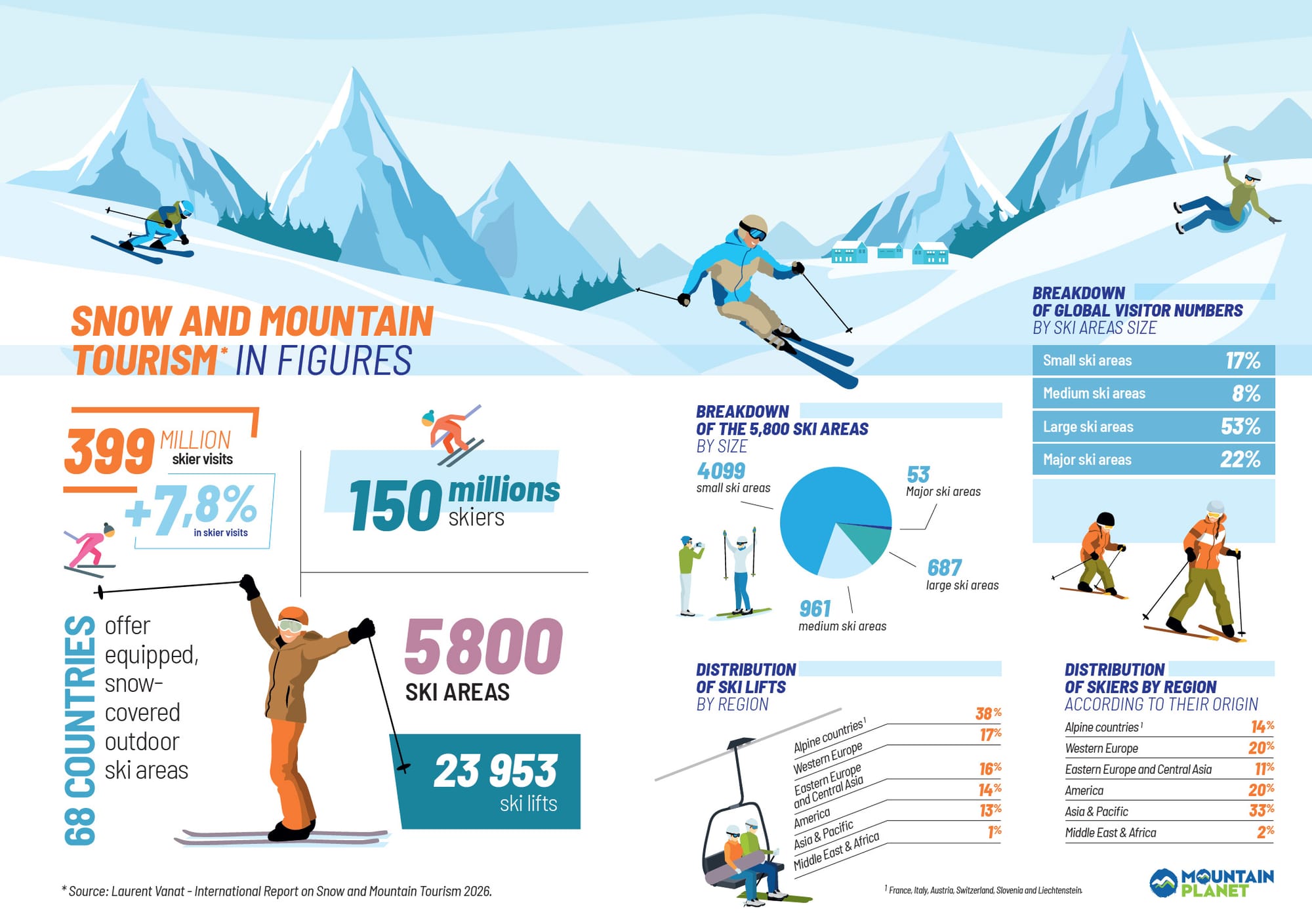
The 2026 International Report on Snow & Mountain Tourism, the18th edition of the annual study into the global ski industry, found there were 399 million skier visits recorded worldwide. That beats the previous record of 392 million recorded in 2018/19, the last full season before the pandemic.
“The season marks the end of the first quarter of the 21st century, a period that experienced an unexpected disruption with the Covid-19 pandemic, which severely affected tourism flows and caused global skier visits to drop by nearly 50% during the winter of 2020/21. At that time, a key question emerged: would the ski industry, often portrayed as vulnerable to climate change, be able to recover?” asks report author Laurent Vanat, who adds, “The data presented in this new edition provide a clear answer: yes. The ski industry has demonstrated strong resilience and has successfully regained its momentum.”
The reports findings indicate that ski resorts have integrated climate change into their operational strategies. Being on the front line to observe its impacts, they have adapted their practices and investments accordingly. The figures show that, at this stage, climate change has not triggered the collapse of the industry often predicted by certain mainstream narratives. Skiers continue to visit ski resorts in large numbers.
Some of the standout findings of the report include the fact that most countries recorded skier visits exceeding their pre-Covid five-year average. Visitation increased in all major regions compared with the previous season and several European ski nations achieved record visitation despite limited natural snow conditions.
“Snowfall was below average, particularly at mid-altitudes and during January. Nevertheless, visitation remained stable or increased in many markets. Extensive snowmaking coverage, efficient resort operations, strong holiday demand and generally favourable weather conditions helped maintain the attractiveness of ski destinations,” says Mr Vanat.
Switzerland recorded its best result in more than fifteen years, while Italy achieved a third consecutive positive season. France, Austria, Spain and Andorra also saw visitation increase despite challenging meteorological conditions. Northern Europe was one of the few regions more significantly affected by weather variability, as Nordic markets remain more dependent on natural snow.

The report found that compared with the average of the five seasons preceding the pandemic, most markets have now fully recovered, and in many cases surpassed, their previous visitation levels. For the second consecutive year, China leads the ranking of countries performing above their historic pre-Covid five-year average. The United States, Italy and Russia also confirm the positive dynamics observed in recent seasons. Switzerland appears to be regaining strong momentum as well. By contrast, Japan and Germany remain the countries where a return to pre-pandemic visitation levels remains the most uncertain.
“Overall, the 2024/25 winter illustrates the operational resilience of the ski industry. In many destinations, efficient management, reliable snowmaking and favourable weather conditions were sufficient to sustain high levels of visitation even with limited natural snow,” Mr Vanat concludes.
The report is based on the 2,000 or so larger ski areas operating in the 68 countries worldwide which have lift-served outdoor ski centres.
The 2026 International Report on Snow & Mountain Tourism can be purchased online through the website of the author: www.vanat.ch