The World’s Shrinking Summer Ski Season
2026 is set to set a new low for the amount of outdoor ski areas open for summer skiing and riding. The number of centres opening at all outside the winter is diminishing and those that do open are mostly opening for ever shorter periods. For the past few decades, new lows have been set most years.
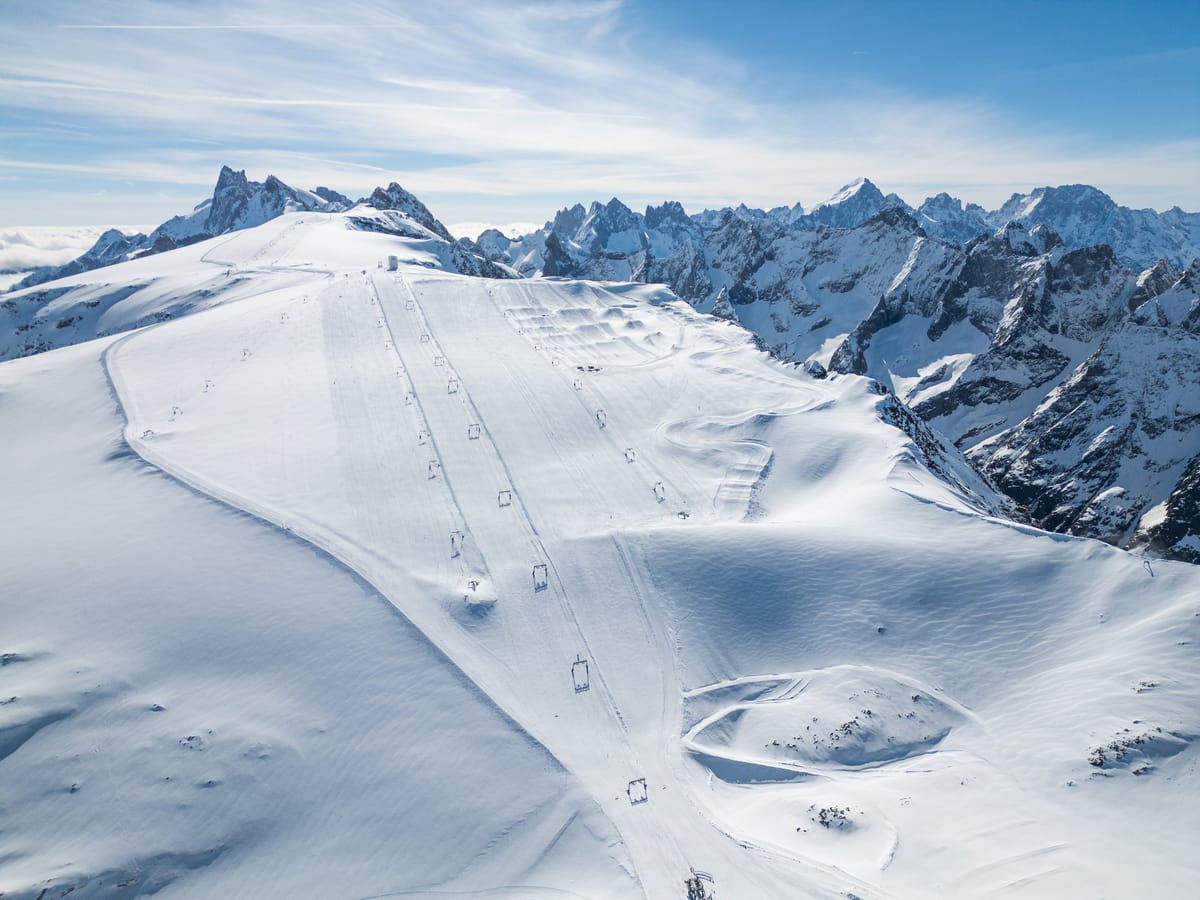
2026 is set to set a new low for the amount of outdoor ski areas open for summer skiing and riding. The number of centres opening at all outside the winter is diminishing and those that do open are mostly opening for ever shorter periods. For the past few decades, new lows have been set most years.
Most of this is driven directly by climate change (the glacial snow melting, the winter snow build-up too little to survive increasingly warm summer temperatures at altitude). Some of it a little more indirectly as the increased costs involved to run lifts in summer for as short time make it financially less viable.
In Europe there were more than 40 summer ski areas in the 1980s, most of which no longer open in late spring or summer. Of the dozen or so still going, the majority have shortened their seasons to just a few weeks.
Of those still opening in summer, arguably the most dramatic change has come at Tignes which was formerly open 365 days a year, then tried to open every month of the year, but now just opens for four weeks in June/July during a 7-month closed spell from early May to late November. Austria’s Sölden has a similar story.
Another Austrian resort, Hintertux, which, along with Zermatt, until recently, was one of the world’s two areas aiming to open year-round, is now closing in mid-summer and instead marketing itself as having “Austria’s longest ski season”. It is indeed staying well ahead of other glaciers that used to stay open into June or July but are now all closing in May. The Dachstein Glacier recently decided to stop lift-accessed skiing all together and has dismantled glacier lifts.
Zermatt is the only ski areas still aiming to open year-round, although it has faced trouble with summer heat some years, most notably in 2022, when record-high temperatures and low snowpack made safe operation impossible and the slopes were forced to close for a period, something previously considered unthinkable.
Scandinavia has also dropped from three to two summer ski areas in the past few years with the drag lift at Fonna starting to collapse and being dismantled as the glacier has melted back 300 metres (1,000 feet) from the original lift entrance, leaving a substantial lake between the glacier and the original entrance.
In North America Whistler Blackcomb has ended summer skiing in recent years. The most reliable summer ski destination The Palmer Snowfield at Timberline on Mt Hood in Oregon which formerly used to stay open to the Labor Day holiday weekend in early September has closed in mid-August in recent years and after a particularly poor winter this year has warned those organising summer camps it may have to close by July 19 this year, although that’s not yet confirmed.
Beartooth Basin on the Montana/Wyoming border, which was established in the mid 1960 by Austrians Pepi Gramshammer, Eric Sailer and Anderl Molterer as the Red Lodge International Ski and Snowboard Camp continues to operate, usually now for a few weeks in late May and early June.
At the same time as ski areas have given up on summer skiing or been forced to shorten their summer season to a few weeks rather than a few months, indoor ski areas have been growing in number and size. There are now more than 150 of these facilities in more than 30 countries on six continents. The largest has now reached an interior snow areas of 100,000 square metres (about 25 acres). Most of the world’s biggest are now in China, which has more than 60 indoor centres and reports nearly 20% of its skiers practice their sport indoors.