First Continuous Ski Descent of 8,126m Himalayan Peak Nanga Parbat
Polish ski mountaineer Andrzej Bargiel, famous, among other things, for being the first man to ski K2, has completed the first continuous ski descent of Nanga Parbat (8,126m) in the Himalayas, one of the world’s 14 8,000m+ peaks, without the use of supplemental oxygen.
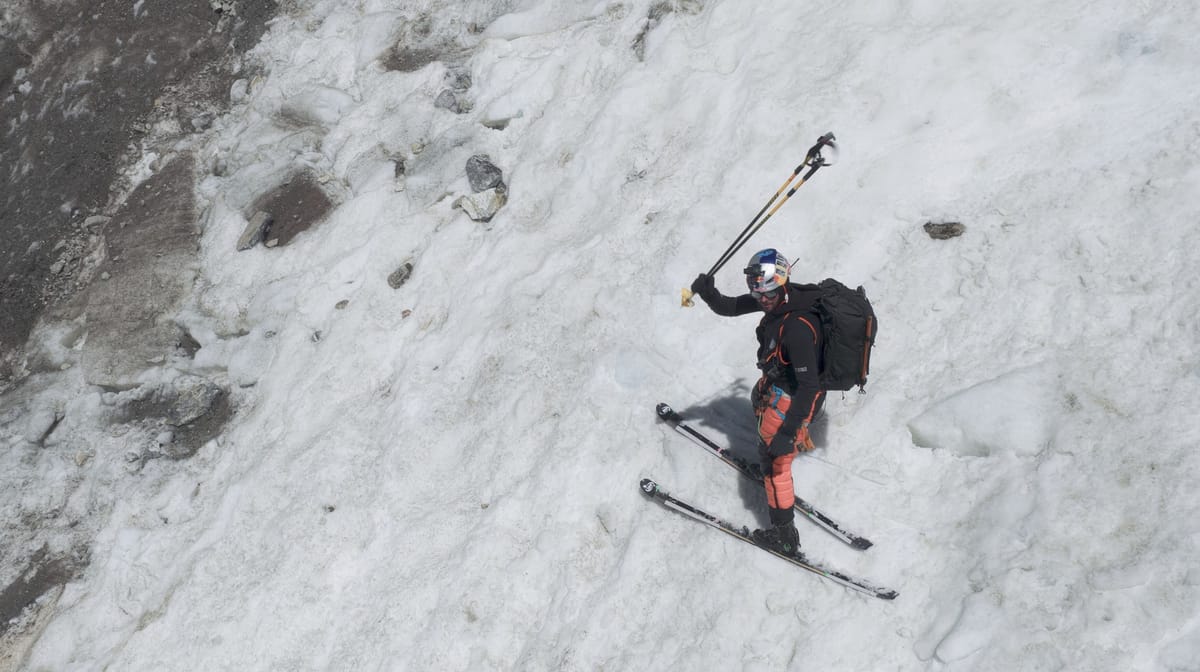
Polish ski mountaineer Andrzej Bargiel, famous, among other things, for being the first man to ski K2, has completed the first continuous ski descent of Nanga Parbat (8,126m) in the Himalayas, one of the world’s 14 8,000m+ peaks, without the use of supplemental oxygen.
The Red Bull sponsored athlete closed his decade-long Pakistan Project by skiing an unbroken Line down from the mountain’s summit to the snowline, without using bottled oxygen. That’s something no one, until now, had achieved in one continuous, oxygen-free push.
Nanga Parbat carries one of the deadliest records among the world's 8,000-metre peaks and is central to the legacy of Reinhold Messner's 1970 ascent of the Rupal Face. Despite numerous previous ski attempts, no expedition had completed a continuous descent from the summit to the end of snow conditions. Bargiel's route ran through the upper Diamir Face, an area complicated by a large serac barrier that had historically forced climbers off their skis.
Bargiel began acclimatisation and high-camp rotation in the second half of June 2026, progressively adapting to altitudes above 8,000 metres while assessing snow and weather conditions.
"I knew that the success of this project would depend on the right timing and the right conditions in the mountains. I'm happy that we were able to find a line that made it possible to complete the entire descent safely. I'd like to thank the whole team and Red Bull for their support," said Andrzej Bargiel after completing the expedition.
He departed Base Camp (4,200 m) at 06:00 on June 28, 2026, climbing without supplemental oxygen. He overnighted at Camp II (6,200 m) and Camp III (6,850 m) during the summit push. He reached the summit of Nanga Parbat (8,126 m) and spent 45 minutes there before transitioning to skis. He descended via the Messner Route, navigating a traverse past a serac barrier that had previously ended ski descent attempts on foot.
Bargiel spent a total of two hours above 7,900–8,000 m, within the mountain's death zone. He completed the ski descent at 15:00 on June 30, 2026, below Camp I (4,400 m), making a vertical descent of around 4,000m and marking the end of continuous skiable snow and the first fully continuous ski line recorded on Nanga Parbat.
"It was one of the most complex ski projects I've ever seen in the high mountains. Andrzej had to constantly assess and solve the terrain in real time throughout the descent. On Nanga Parbat, there is no room for chance," commented team member Janusz Gołąb.
Andrzej Bargiel, holds the first full ski descents of K2 (2018) and Broad Peak (2015), and in 2025 became the first person to climb and ski Mount Everest from summit to Base Camp without supplemental oxygen. With Nanga Parbat, he becomes the first person to have climbed and skied Broad Peak, K2, Gasherbrum I, Gasherbrum II, Everest, and Nanga Parbat without supplemental oxygen.