
Is Great Bear Ski Valley snowsure?
The snowiest week in Great Bear Ski Valley is week 4 of February. There are typically 1.5 snowy days during this week with 9 cm of snowfall. Check out the Great Bear Ski Valley Snow History graphs below. Select any week of the year to see the typical Ski Conditions, Snowfall Amount and Temperature based on nowcast weather data over the last 11 years.Average monthly snow in Great Bear Ski Valley
| Month | Snow amount (week) | Snow days (week) |
|---|---|---|
| December | 5 cm | 1.4 days |
| January | 6 cm | 1.7 days |
| February | 6 cm | 1.6 days |
| March | 5 cm | 1.2 days |
| April | 3 cm | 0.6 days |
Average Snow and Weather Conditions in Great Bear Ski Valley during September (week 2):
The average snowfall forecast during week 2 of September for Great Bear Ski Valley is 0 cm. There are typically 0.0 snowy days during this week. Great Bear Ski Valley expected weather and snow conditions during the second week of September at the middle elevation of the ski area at 441m, based on historical averages over the last 14 years: At this time of year the mean freezing level (3951m) is well above the mid altitude of Great Bear Ski Valley. Snowfall is highly unlikely in Great Bear Ski Valley in the middle of September but on average there are one or two wet days during this week every year. Warm day temperatures in Great Bear Ski Valley during week two of September. The average temperature extremes are between 18.3°C and 21.0°C at the mid altitude. Expect the sun to shine on three or four days per week. Mainly light winds (average 18km/h) but the historical norm is for the mean wind to reach 30km/h one day in this week.
Snow History: Compare Resorts
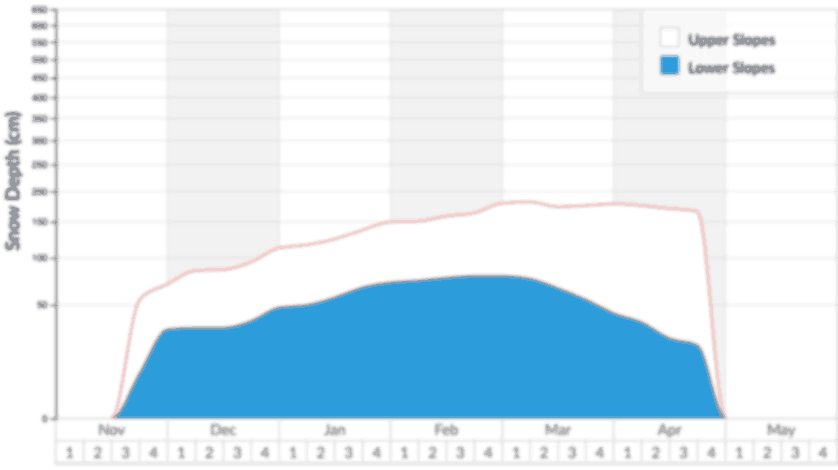
Great Bear Ski Valley Snow Depths
Recorded snow depths for the upper and lower slopes in Great Bear Ski Valley and (2012 – 2026).

The most cherished days on the mountain in Great Bear Ski Valley are Bluebird Powder days when it is mostly sunny with light winds following very recent snowfall. Poorer weather conditions may prevail on Powder days when the visibility can be limited but the snow is significantly deep and fresh for keen powder-hounds. Bluebird days can suit many skiers that aren’t necessarily hunting powder but want to enjoy the snowy mountains in sunnier conditions and light winds.

The snowiest weeks of the year in Great Bear Ski Valley are shown but also bear in mind the number of days that it typically snows each week if you want regular fresh tracks. The risk of a rainy day is shown but be sure to switch between elevations to see if lower lifts are rain affected or higher lifts remain snowy despite any rain further down the mountain.

The highest and lowest temperatures averaged for each week of the year in Great Bear Ski Valley are shown. Check out the risk of freze-thaw conditions prevailing at different elevations for any given week. We also show the extremes of temperature (blue/red dots) that reveal the chance of unusually warm or cold conditions.
 Nearest