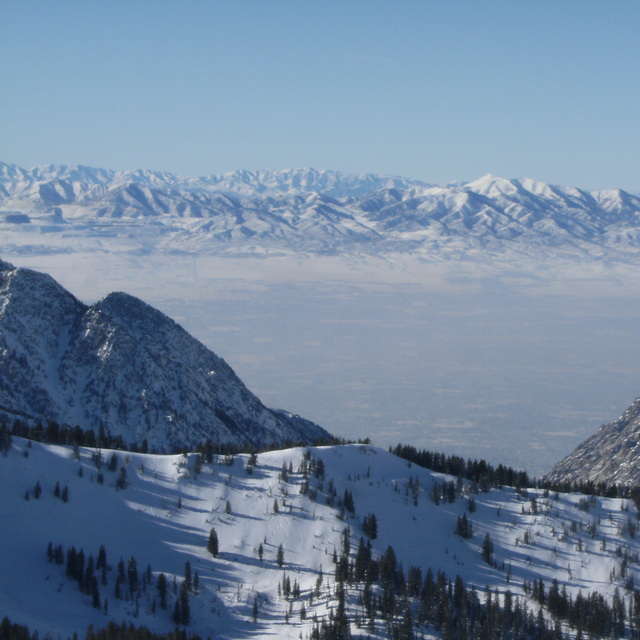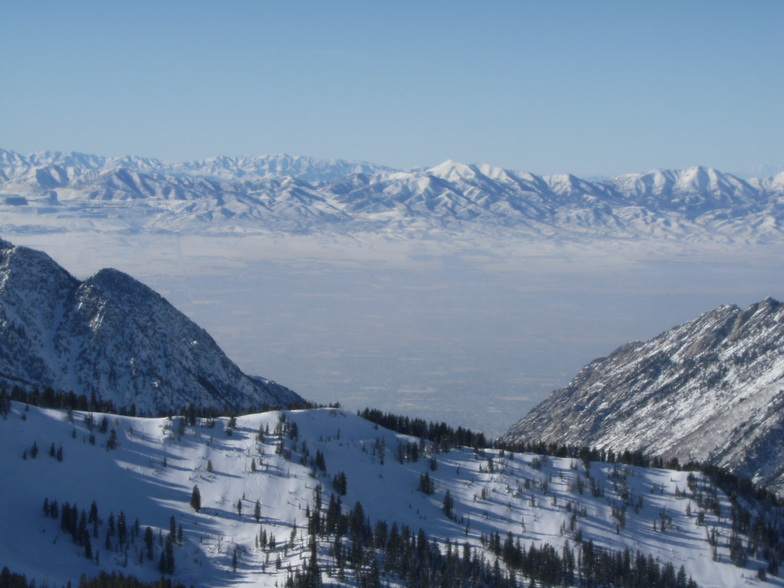


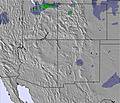
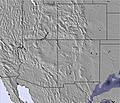
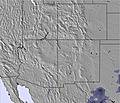
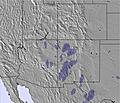


Snowbird, USA - Utah
| Resort Info | Webcams | Snow Report | Historical Snow | Current Weather | Resort Reviews |
| 6 Day Forecast (free) top: 3352m mid: 2858m bot: 2364m |
2 Day Detail (subscribers) top: 3352m mid: 2858m bot: 2364m |
9 Day Forecast (subscribers) top: 3352m mid: 2858m bot: 2364m |
Piste Map | Weather Maps | Snowfinder |
| 6 Day Weather Forecast for 2858 m altitude, issued (local time): 10 pm 16 May 2008 |
| Days 0-3 Snowbird Weather Summary: Mostly dry. Very mild (max 16°C on Sun afternoon, min 1°C on Fri night). Wind will be generally light. | Days 4-6 Snowbird Weather Summary: A light covering of new snow mostly falling on Thu morning. Freeze-thaw conditions (max 17°C on Tue afternoon, min -6°C on Wed night). Winds increasing (light winds from the WNW on Mon night, fresh winds from the W by Tue afternoon). | |||||||||||||||||
|
Fri 16
night
|
Sat 17
morn-ing |
Sat 17
after-noon |
Sat 17
night
|
Sun 18
morn-ing |
Sun 18
after-noon |
Sun 18
night
|
Mon 19
morn-ing |
Mon 19
after-noon |
Mon 19
night
|
Tue 20
morn-ing |
Tue 20
after-noon |
Tue 20
night
|
Wed 21
morn-ing |
Wed 21
after-noon |
Wed 21
night
|
Thu 22
morn-ing |
Thu 22
after-noon |
|
| Wind (km/h) | ||||||||||||||||||
| Summary | clear | clear | clear | clear | some clouds | clear | clear | clear | clear | clear | some clouds | some clouds | light snow | light snow | light snow | snow shwrs | light snow | light snow |
| Snow cm | - | - | - | - | - | - | - | - | - | - | - | - | 1 | 2 | - | 2 | 3 | 1 |
| Rain mm | - | - | - | - | - | - | - | - | - | - | - | - | - | - | - | - | - | - |
| Max °C | 3 | 12 | 14 | 5 | 14 | 16 | 8 | 15 | 16 | 9 | 15 | 17 | 6 | -1 | 0 | -4 | -4 | -2 |
| Min °C | 1 | 9 | 13 | 2 | 11 | 15 | 5 | 12 | 15 | 7 | 13 | 15 | 0 | -1 | 0 | -6 | -5 | -3 |
|
|
-1 | 8 | 12 | -1 | 10 | 14 | 2 | 11 | 14 | 6 | 11 | 13 | -6 | -7 | -6 | -13 | -11 | -9 |
| Freezing level (m) | 4150 | 4200 | 4500 | 4450 | 4500 | 4800 | 4750 | 4650 | 4850 | 4800 | 4650 | 4700 | 3350 | 2600 | 2700 | 2200 | 2250 | 2550 |
![]() |
|
|||||||||||||||||
| Sunrise | - | 5:07 | - | - | 5:05 | - | - | 5:05 | - | - | 5:05 | - | - | 5:03 | - | - | 5:03 | - |
| Sunset | - | - | 19:38 | - | - | 19:38 | - | - | 19:39 | - | - | 19:40 | - | - | 19:42 | - | - | 19:43 |
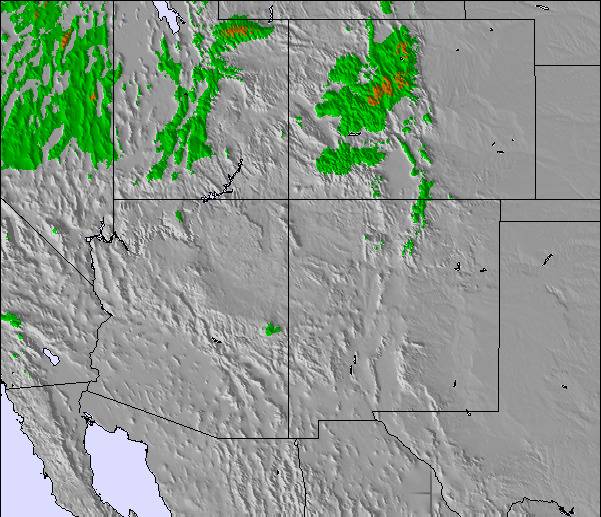
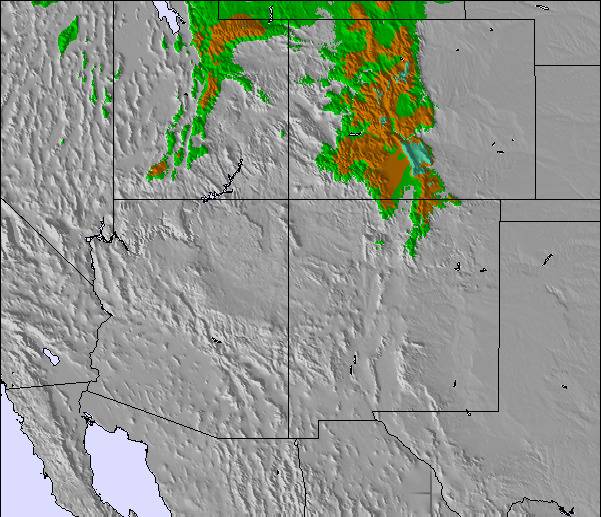
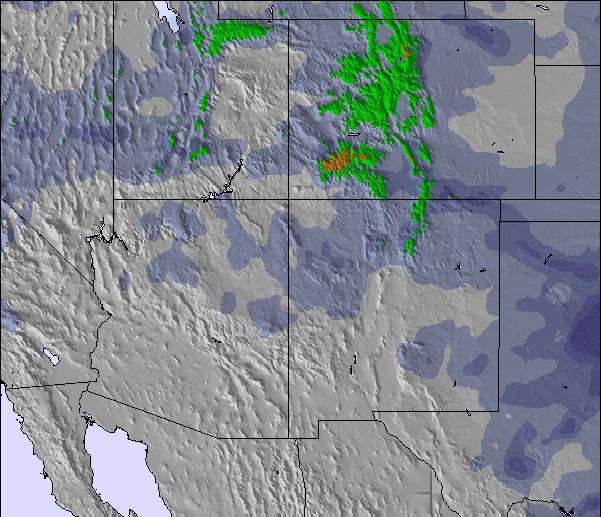
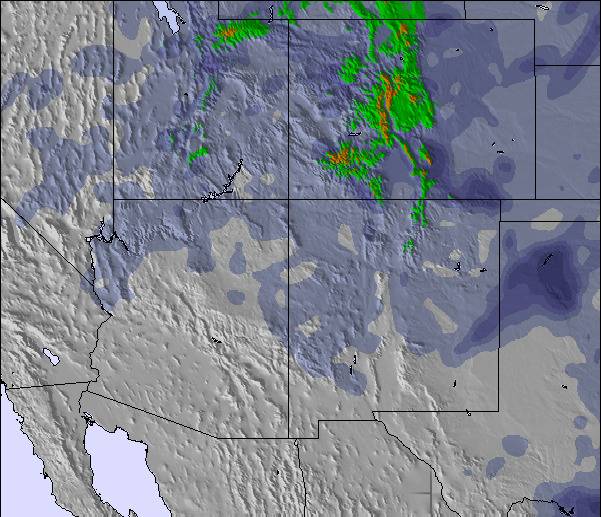
The above table gives the weather forecast for Snowbird at the specific elevation of 2858m. Our sophisticated weather models allow us to provide snow forecasts for the top, middle and bottom stations of Snowbird. To access the weather forecasts for the other elevations, use the tab navigation above the table. For a wider view of the weather, check out the Weather Map of United States.
NOTE ABOUT FREEZING LEVELS AND TEMPERATURES
The freezing level that we forecast Snowbird is the free air freezing level. (More specifically, it is the uppermost free air freezing level). This means that all of the air above this elevation is below freezing however it does not necessarily imply that all of the air below it is above freezing. We provide this because it best describes the level where falling snow first starts to turn to rain. On average, snowflakes only stay frozen for about 100 metres (300 feet) below the free air freezing level. That's because air temperatures usually increase steadily as you descend - but not always. For example, a temperature inversion describes a pool of cold air near the ground with a layer of warmer air above it. This is a common occurrence in winter when the wind is light. Such pools of dense cold air can vary from a few metres to several kilometres deep and can persist from hours to several weeks. In an inversion, it can be simultaneously below freezing in a mountain valley, and also at a nearby summit, yet above freezing at some elevation in between. Most visitors to the Alps are very familiar with this. Such conditions can allow snow to fall much more than the usual 100 metres below the top freezing level, even reaching the valley, just as long as snow did not pass through enough warm air to melt. Otherwise, freezing rain or re-frozen soft hail (there is even a German word for it - graupel) reaches the valley instead. Our forecasts allow for these possibilities which is why you may see forecasts of snowfall and frost at elevations far below the free-air freezing level, or valley temperatures that are lower than summit temperatures. You may even see forecasts of rain to fall even though it is just below freezing at the surface - that happens if our model predicts that there is a deep warm layer just above. None of these are as contradictory as they may seem at first.
All of our temperature forecasts for Snowbird are for the ground, not the air. These can be very different to free-air temperatures, especially at night. This can lead to what looks like a contradiction. Because the ground is such a good radiator of heat (especially on clear nights when there is a snow cover and the wind is light) surface temperatures often fall more than far below the free air temperatures - sometimes by more than 10 degrees. On such occasions, the snowpack freezes at elevations that are far below the free air freezing level. For example, in the European Alps, snow tends to freeze in valleys on still clear and still nights even if the free air freezing level is above 3000m simply because snow is so efficient radiating its heat away. In reality there are two freezing levels; one just above the snow surface and another at 3000m with a layer of warmer temperatures in between where the snow may not freeze at all. In summary, the reason we provide surface temperatures isbecause these determine the condition of the snowpack.
FREE Snowbird Weather Feed for your site:
Simply copy and
paste the code below into your pages!