Japan Weekly Snow Roundup #298
Weekly Snow News for Japan, updated 21 January 2026: Japan leads global snowfall again, with 1m (40") in 72 hours on Hokkaido and heavy, cold powder spreading into Honshu.
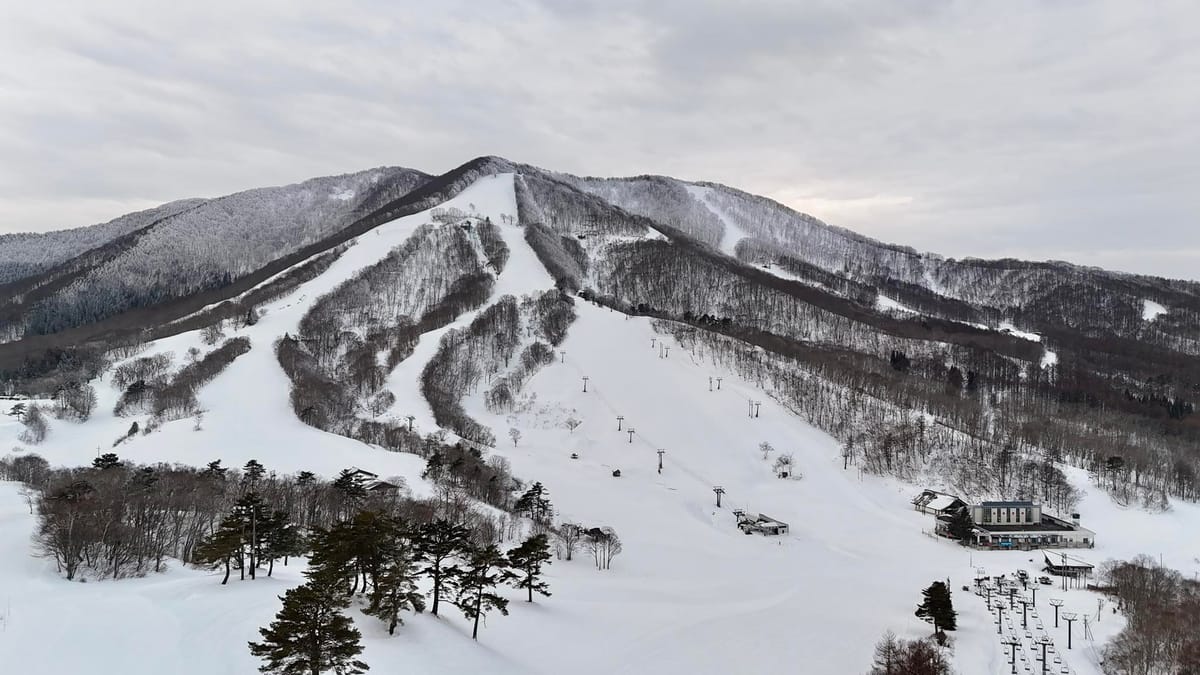
- Japan tops global snowfall totals once again
- Hokkaido records metre-deep 72-hour accumulations
- Snow focus shifts south into Honshu
- Cold midwinter pattern locks in powder conditions
Japan Snow Report and Ski Conditions 2025/26
Japanese resorts, particularly although not exclusively on Hokkaido initially, have continued to top world snowfall totals over the past week, as they have for most weeks of the season to date.
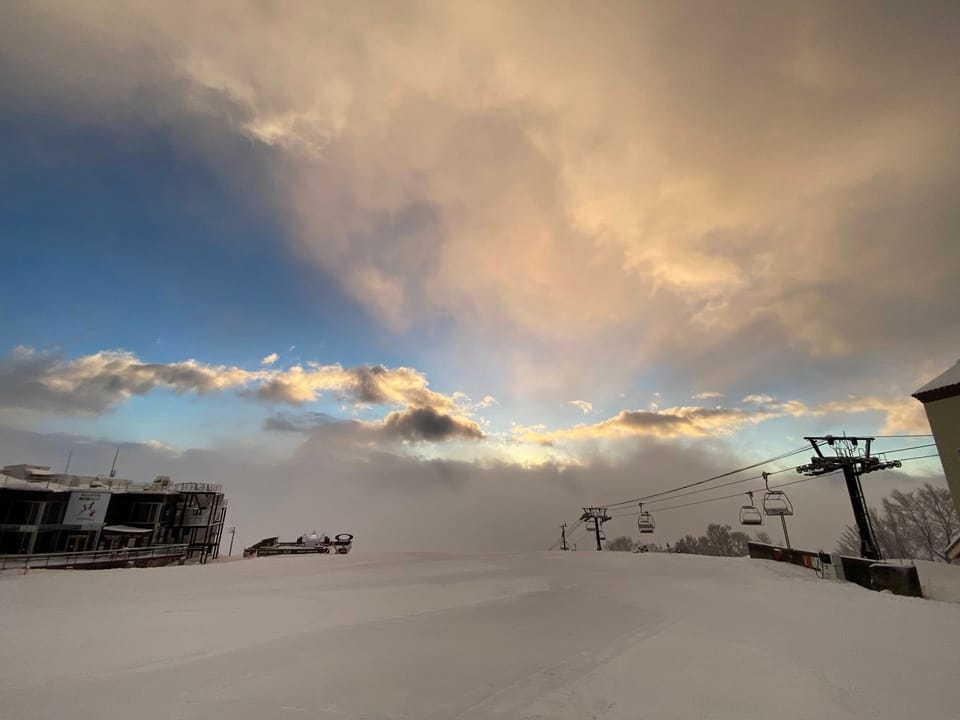
Rusutsu (130/190cm / 52/76") posted a 1m (40") accumulation over 72 hours going into last weekend, with Furano (115/210cm / 46/84") not far behind, reporting a 90cm (36") snowfall total over the same period. Niseko (136/236cm / 54/94") also reported 60cm (24") of fresh snow. Since the weekend, although it has remained cold with frequent snowfall on Hokkaido, the focus has turned to Honshu, where some even more spectacular snowfalls have been moving in.
Conditions are good across the country, with most Japanese ski areas now reporting at least 90% of their slopes open. A higher proportion than in most other leading ski nations have already reached 100% skiable terrain.
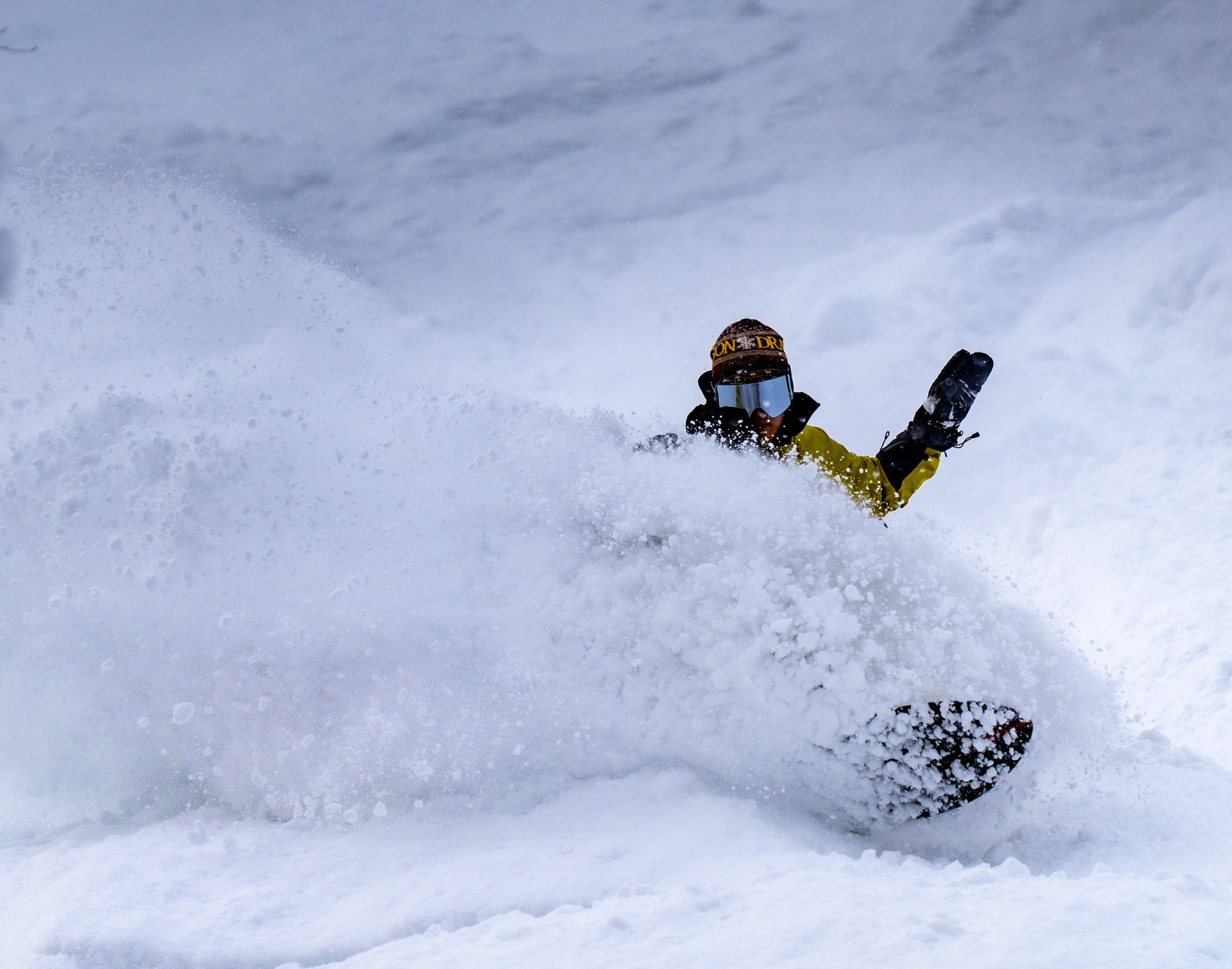
Japan Snow Forecast
Japan is heading into a very snowy, very cold week, with both Hokkaido and Honshu showing sustained sub-zero temperatures at altitude and repeated snowfall signals across major resorts.
On Hokkaido, resorts such as Niseko, Rusutsu and Furano are forecast to see mountain temperatures between roughly -21 and -8 °C, with base temperatures often ranging from -17 to 0 °C.
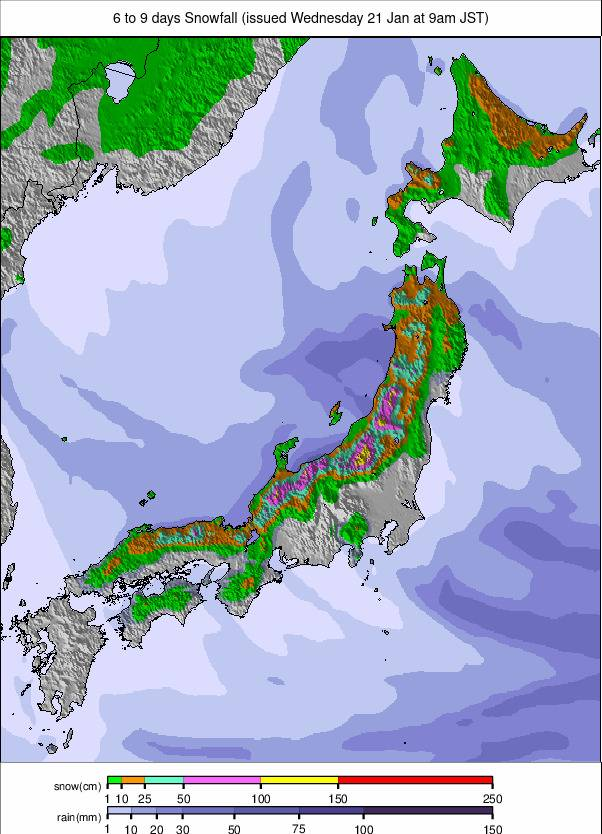
Honshu’s major Nagano and Niigata areas, including Hakuba, Nozawa, Shiga Kogen and Myoko, also remain cold. Upper-mountain temperatures commonly sit between -19 and -3 °C, while bases fluctuate from -6 to 10 °C depending on elevation.
Forecasts show multiple snow events over the coming days, with several Honshu resorts expecting notable accumulations. Overall, this is a classic Japanese midwinter pattern, delivering deep cold, frequent snowfall and excellent powder potential.